
Do Your Wood Floors, Cabinets, and Furniture Have to Match?

A home can feel warm, welcoming, and beautifully pulled together without every wood finish matching. Think of a dark cabinet styled with your favorite mugs, lighter wood shelves above it, and a soft rug underfoot. Each piece brings something different, and together they create a space that feels like home.
When you’re choosing a dining table, fireplace mantel, or floating shelves, it’s still easy to wonder whether the wood needs to match everything already in your home.
Should the mantel match the flooring? Should your dining table be the same color as your cabinets? And how do your countertops fit into the picture?
Your finishes don’t have to match exactly to look good together. A room can feel cohesive with different wood species, stain colors, and materials. The key is choosing combinations that feel intentional.
Think Coordination Over Exact Matching
Matching finishes can create a beautiful room, but it’s one approach among many. A lighter wood floor can provide a backdrop for a darker dining table. A natural wood mantel can bring warmth to a room with painted cabinets. Shelves can complement nearby furniture without being the same species or stain.
Instead of asking, “Is this the exact same color?” ask, “Do I like how these materials look together?” That gives you room to choose pieces you love without making every purchase dependent on an exact match.

A Beautiful Example from Becki Owens
For more inspiration, explore Becki Owens’s Autumn Lane project. As you browse her project photos, look at how the flooring, cabinetry, furniture, and other finishes relate to one another. It’s a helpful way to think about your own home: consider the whole palette instead of trying to match every piece to a single wood color.
How to Mix Wood Tones in Your Own Home
Start with what’s already there. Your flooring or kitchen cabinets may be the largest wood surfaces in the room. Use those as a starting point when choosing a new table, mantel, or shelves.
Pay attention to undertones. Wood can read golden, reddish, gray, or more neutral. Related undertones are a useful starting point for combining different finishes, even when one is much lighter or darker than another. They’re a guide, not a rule that every piece has to follow.
Give contrast a chance. If you can’t find an exact match, a clearly different tone may look more intentional than something that almost matches. A dark traditional cabinet against lighter oak flooring, for example, can feel right at home without copying the floor’s color.
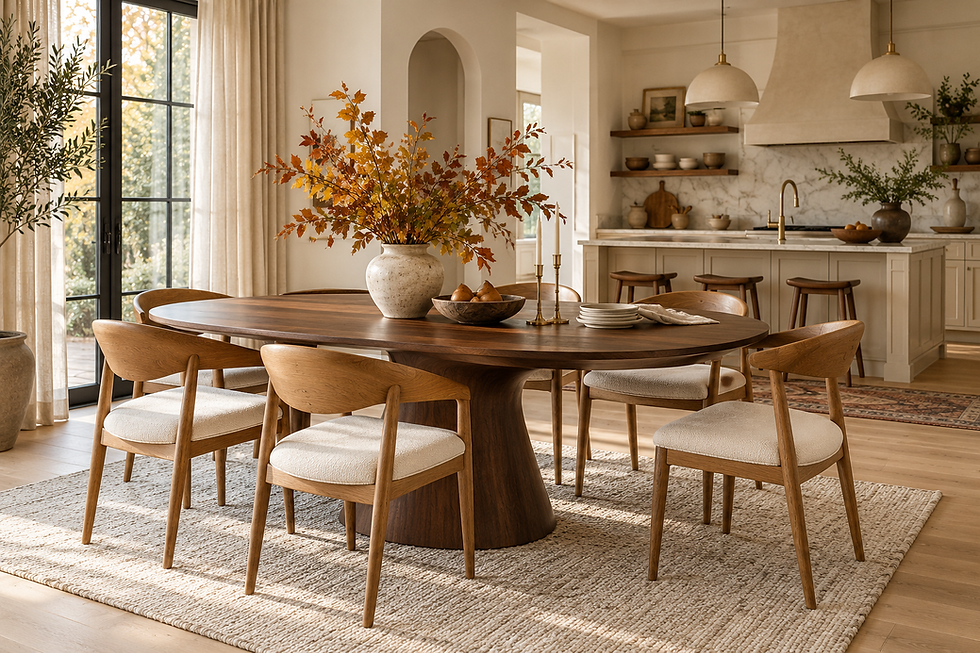
Repeat a tone somewhere else. A mantel’s color might connect with a chair frame, picture frame, or small accent piece. You don’t need matching furniture sets to create a sense of continuity.

Include your countertops in the whole palette. Stone doesn’t need to match the wood, either. Look at its background color and veining alongside your cabinets, flooring, and finish samples.
Compare Samples in Your Space
Photos are helpful, but lighting can change how a finish appears. Before deciding, place physical samples near your existing materials and look at them in daylight and under your evening lighting.
Also remember that the same stain can look different on different wood species, and even on different boards. Natural variation is part of working with real wood.
Choose Pieces That Belong in Your Home
You don’t have to make every wood surface identical. A thoughtful mix can give your home warmth, depth, and personality.
At Native Rift, we encourage you to consider how a new piece will work with the whole room. Your mantel, table, or shelves can complement what you already have while bringing something of their own to the space.


Comments